How to Choose a 6GHz Wireless Bridge for Industrial & Outdoor Long-Range Transmission
How to Choose a 6GHz Wireless Bridge for Industrial & Outdoor Long-Range Transmission
Introduction: Why 6GHz Wireless Bridges Are Reshaping Outdoor Transmission
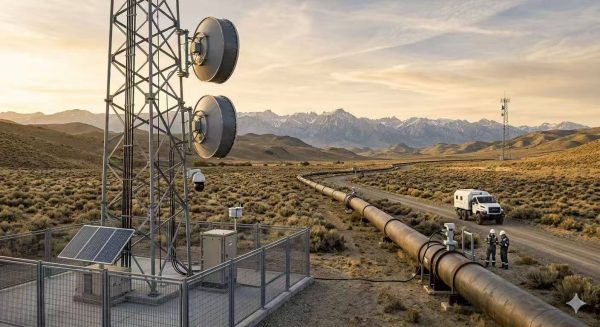
The demand for reliable, high-capacity wireless backhaul in outdoor environments has never been more critical. Security surveillance networks require uninterrupted video transmission from remote cameras. Rural broadband initiatives demand last-mile connectivity over tens of kilometers. Industrial IoT sensor networks need deterministic data paths across oil fields, pipelines, and mining sites. In every case, the transmission medium must contend with interference, weather, distance, and physical obstructions.
For the past decade, 5 GHz licensed-exempt bands have been the default choice for outdoor PtP and PtMP links. But as 5 GHz spectrum becomes increasingly congested — saturated by Wi-Fi access points, neighboring wireless bridges, and consumer electronics — the 6 GHz band (5.9–6.4 GHz) has emerged as a strategic alternative. It offers cleaner spectrum, reduced co-channel interference, and sufficient propagation characteristics for links spanning 5 to 15 kilometers under line-of-sight (LoS) conditions.
This article provides a comprehensive, engineering-grade guide to selecting a 6 GHz wireless bridge for industrial and outdoor long-range transmission. We examine the 6 GHz frequency advantage, critical technical selection criteria, the iPoll 3 protocol architecture, and a detailed comparison of two production-ready 6 GHz solutions: the LigoDLB 6-20ac (PTP CPE) and the LigoDLB 6-90ac (PTMP Base Station).
6 GHz Band vs. 2.4 GHz / 5 GHz: The Measured Advantage
Understanding why 6 GHz matters for outdoor wireless bridges requires examining the physical and regulatory characteristics of each frequency band. The table below summarizes the key differentiators.
| Parameter | 2.4 GHz | 5 GHz | 6 GHz (5.9–6.4 GHz) |
|---|---|---|---|
| Available Spectrum | ~83 MHz | ~500 MHz | ~500 MHz (5.9–6.4 GHz) |
| Typical Channel Congestion | Very High | High | Low to Moderate |
| Relative Propagation (Free Space) | Reference (0 dB) | -6 dB vs 2.4 GHz | -7.5 dB vs 2.4 GHz |
| Max Channel Width (Typical) | 20/40 MHz | 20/40/80 MHz | 20/40/80 MHz |
| Non-Overlapping Channels (80 MHz) | 1 | 2–5 | 5–7 |
| Interference from Non-Wi-Fi Sources | High (Bluetooth, Zigbee, microwaves) | Moderate (Radar, DFS) | Low (Minimal incumbent users) |
| Outdoor PtP Range (with 20dBi antenna) | 20–30 km | 10–20 km | 7–15 km |
The 6 GHz band occupies a strategic middle ground. Its propagation loss relative to 2.4 GHz is approximately 7.5 dB higher at the same distance — a penalty that can be recovered through higher antenna gain (15–20 dBi integrated, or up to 30 dBi with external parabolic dishes). In return, the user gains access to spectrum that is substantially less congested than 2.4 GHz or 5 GHz, particularly in urban and industrial areas where 5 GHz is heavily utilized by existing Wi-Fi infrastructure, radar systems, and DFS (Dynamic Frequency Selection) mechanisms.
For outdoor PtP links operating over 5–15 km, the 6 GHz band offers an optimal balance between range and spectral cleanliness. The LigoDLB 6-20ac achieves a PTP distance recommendation of 7 km (global datasheet) using its integrated 20 dBi dual-polarized directional panel antenna, and up to 15 km under optimal line-of-sight conditions as documented by regional distributors. The LigoDLB 6-90ac base station covers a PTMP sector of up to 5 km with its integrated 18 dBi 90-degree sector antenna.
Industrial-Grade 6 GHz Wireless Bridge: Key Technical Selection Criteria
Selecting a 6 GHz wireless bridge for industrial outdoor deployment requires evaluating eight technical dimensions. Each is examined below with specific reference to the LigoDLB 6 series hardware parameters.
Operating Mode Selection: PtP (Point-to-Point) vs. PtMP (Point-to-Multi-Point)
The first architectural decision is whether the link topology requires point-to-point or point-to-multi-point operation. This choice drives the antenna type, protocol stack, and hardware selection.
PtP (Point-to-Point) is used when exactly two locations need a dedicated wireless link — for example, connecting a remote surveillance site to a central monitoring station, or bridging two office buildings. PtP links use high-gain directional antennas on both ends to maximize link budget. The LigoDLB 6-20ac is designed primarily for PtP deployment with its integrated 20 dBi directional panel antenna and iPoll 3 protocol optimized for point-to-point throughput exceeding 500 Mbps.
PtMP (Point-to-Multi-Point) is used when one base station must serve multiple remote client sites — for example, a rural broadband network where a single tower-mounted base station connects 10–50 subscriber homes. PtMP base stations use sector antennas with wider beamwidth (60–120 degrees) to cover a geographic sector. The LigoDLB 6-90ac is built specifically for this role, featuring an 18 dBi integrated sector antenna with a 90-degree azimuth beamwidth and iPoll 3 protocol that supports efficient polling-based medium access for multiple CPEs.
6 GHz RF Parameters: Frequency, Power, Channel Bandwidth, and Modulation
The radio frequency (RF) specifications of a 6 GHz bridge directly determine achievable throughput, range, and interference resilience. The LigoDLB 6 series is built around a common hardware platform — the Qualcomm QCA 9563 CPU (750 MHz) paired with the QCA 9882 radio — ensuring consistent RF performance across both models.
Frequency Range: 5.9–6.4 GHz. This covers the lower 6 GHz band allocated for unlicensed use in multiple regulatory domains, including the 5925–6425 MHz range adopted by the EU (CEPT) and aligning with the 5.9–6.4 GHz window commonly available in Russia and CIS countries for point-to-point and point-to-multi-point wireless systems.
Transmit Power: Up to 30 dBm (country-dependent). A maximum conducted output power of 30 dBm (1 watt) at the radio interface, combined with 15–20 dBi antenna gain, yields an EIRP (Effective Isotropic Radiated Power) of 45–50 dBm — sufficient for 7–15 km PtP links under LoS conditions.
Key RF Specification — LigoDLB 6-20ac (PTP CPE):
– Frequency: 5.9–6.4 GHz | 2×2 MIMO | Max Tx Power: 30 dBm
– Channel Width: 5/10/20/40/80 MHz | Modulation: up to 256-QAM
– Antenna: Integrated 20 dBi dual-polarized directional panel
– Max Throughput: 500+ Mbps (iPoll 3 protocol, 80 MHz channel)
– Reference: LigoDLB 6-20ac Product Page
Key RF Specification — LigoDLB 6-90ac (PTMP Base Station):
– Frequency: 5.9–6.4 GHz | 2×2 MIMO | Max Tx Power: 30 dBm
– Channel Width: 5/10/20/40/80 MHz | Modulation: up to 256-QAM
– Antenna: Integrated 18 dBi dual-polarized 90° sector
– Max Throughput: 500+ Mbps (iPoll 3 protocol, 80 MHz channel)
– Coverage: Up to 5 km PTMP
– Reference: LigoDLB 6-90ac Product Page
Antenna Configuration: Gain, Polarization, and Beamwidth
The antenna is arguably the most critical component of an outdoor wireless bridge. It determines how much of the transmitted power is directed toward the receiver and how much interference is rejected from off-axis sources.
LigoDLB 6-20ac Antenna: Integrated dual-polarized directional panel antenna with 20 dBi gain, 35-degree azimuth beamwidth (both H-pol and V-pol), and 35-degree elevation beamwidth. The dual-linear polarization provides 21 dB cross-pol isolation, enabling polarization diversity to mitigate multipath fading. The 35-degree beamwidth allows for relatively straightforward installation alignment while maintaining sufficient directivity for interference rejection.
LigoDLB 6-90ac Antenna: Integrated dual-polarized sector antenna with 18 dBi gain, 90-degree azimuth beamwidth (both H-pol and V-pol), and 20-degree elevation beamwidth. The wider azimuth beamwidth enables sector coverage for PtMP deployments, while the 24 dB cross-pol isolation provides robust polarization separation. The narrower elevation beamwidth (20 degrees) concentrates energy in the horizontal plane, which is optimal for tower-mounted base stations covering ground-level CPEs.
Environmental Protection: IP65/IP66, Wide Temperature Range, and Corrosion Resistance
Industrial outdoor bridges must survive conditions that would destroy consumer-grade electronics: rain, snow, ice, UV radiation, temperature extremes, and corrosive atmospheres.
Ingress Protection: The LigoDLB 6 series is rated IP65 (dust-tight and protected against water jets), with LigoWave’s global comparison page listing IP66 for some variants. This rating ensures operation in rain, snow, and high-humidity environments without ingress damage.
Operating Temperature: –40°C to +65°C (–40°F to +149°F). This range covers the extreme cold of Siberian winters, the desert heat of Central Asian summers, and the temperature swings typical of continental climates. For comparison, typical commercial-grade electronics are rated 0°C to +40°C. The –40°C rating is particularly relevant for the Russian market, where large portions of the territory experience sustained winter temperatures below –30°C.
Corrosion and Material Construction: The LigoDLB 6-20ac features a non-metallic IP65 weatherproof exterior that is lighter and inherently corrosion-resistant. This is critical for installations in coastal areas, oil and gas facilities where H₂S and other corrosive gases are present, and industrial zones with high atmospheric pollution.
Transmission Performance: Throughput, Latency, Capacity, and Error Correction
Under the iPoll 3 protocol with an 80 MHz channel and 256-QAM modulation, both the LigoDLB 6-20ac and LigoDLB 6-90ac deliver a maximum throughput exceeding 500 Mbps. This is real Ethernet-layer throughput (TCP/UDP), not PHY-layer signaling rate. The actual throughput depends on channel width, modulation order, distance, and interference level:
— At 80 MHz channel width, short range (LOS, high SNR): 500+ Mbps aggregate throughput.
— At 40 MHz channel width, medium range: 250–350 Mbps aggregate throughput.
— At 20 MHz channel width, maximum range: 120–180 Mbps aggregate throughput.
Error Correction: The radio supports FEC (Forward Error Correction) and LDPC (Low-Density Parity-Check) coding, which are essential for maintaining link stability under marginal SNR conditions. LDPC provides coding gains of 2–6 dB over convolutional coding at the same code rate, translating to approximately 15–40% range extension at the same throughput.
Duplexing: Time Division Duplex (TDD) is used, which allows asymmetric bandwidth allocation — important for video surveillance backhaul where downlink (camera to NVR) traffic dominates, or for rural broadband where downlink (internet to subscriber) traffic dominates.
Management Stack: iPoll 3, QoS, SNMP, Web UI, and Infinity Controller
A wireless bridge is only as reliable as its management and control plane. The LigoDLB 6 series provides four tiers of management access:
1. Web UI (HTML5 responsive): Full device configuration and monitoring via any modern browser. Built on HTML5 with responsive design, enabling access from desktops, tablets, and smartphones on-site.
2. SNMP v3: Integration with enterprise network management systems (NMS). SNMP v3 provides encrypted authentication and data privacy, essential for managed networks where the bridge must report to a central monitoring platform.
3. Syslog: Remote logging for troubleshooting and performance analysis. Syslog output can be directed to a central log server for historical analysis of link performance and fault events.
4. Infinity Controller: LigoWave’s centralized wireless network management platform. Infinity Controller enables automated device onboarding, predefined network scenarios, centralized firmware upgrades, and real-time monitoring across the entire LigoDLB deployment. This is particularly valuable for system integrators managing multi-site deployments across large geographic areas.
QoS (Quality of Service): The LigoDLB series implements L2 (CoS) and L3 (ToS/DSCP) classification with the Weighted Round Robin (WRR) scheduling algorithm. Four traffic classes are supported — network management, voice, video, and data — each with configurable priority levels. For video surveillance backhaul, this ensures that critical video streams receive priority over bulk data transfers.
Power Supply and Interface: PoE Gigabit Ethernet
Both models are powered by 24 VDC passive PoE (Power over Ethernet) via the included AC-to-24VDC adapter. Maximum power consumption is 10 W, which is energy-efficient for solar-powered or battery-backed deployments common in remote locations. The wired interface is a single 10/100/1000 Base-T RJ45 port.
Certification: IC/CE Compliance
The LigoDLB 6 series carries IC and CE certifications, covering the Canadian and European regulatory frameworks respectively. For the Russian market, compliance with EAEU (Eurasian Economic Union) technical regulations — including EAC certification — should be verified with the distributor for the specific target region. The devices operate in the 5.9–6.4 GHz band, which aligns with the regulatory frameworks active across most of EMEA and CIS.
LigoWave 6 GHz Series Core Technology: iPoll 3 Protocol, QoS, and Hardware Platform
iPoll 3: How the Proprietary Polling Protocol Delivers Superior PtMP Performance
The iPoll 3 protocol is LigoWave’s proprietary Layer 2 wireless protocol, designed specifically to address the limitations of standard 802.11 CSMA/CA (Carrier Sense Multiple Access with Collision Avoidance) in PtMP outdoor environments.
In standard 802.11-based PtMP, all CPEs contend for channel access using CSMA/CA. As the number of CPEs increases, collision probability rises exponentially, leading to throughput collapse and unpredictable latency — the well-known “hidden node” problem becomes acute in outdoor PtMP where CPEs cannot hear each other’s transmissions.
iPoll 3 replaces contention-based access with a deterministic polling mechanism:
1. The base station (BS) polls all connected CPEs in sequence.
2. The BS sends a data frame and a transmission token to one CPE.
3. The authorized CPE sends its data frame back to the BS.
4. The BS confirms successful reception, then proceeds to poll the next CPE.
This eliminates data collisions entirely because only one CPE transmits at any given time. The polling schedule is adaptive: CPEs with low traffic are moved to a low-activity list and polled less frequently, while active CPEs remain on the active list for higher polling priority. The result is deterministic latency, zero packet collisions, and support for a larger number of connected CPEs per base station compared to CSMA/CA-based protocols operating in the same channel conditions.
In real-world deployments, iPoll 3 has demonstrated throughput efficiency of 85–95% of the PHY-layer data rate in PtMP mode, compared to 50–65% for standard 802.11 CSMA/CA under similar CPE density. The protocol is backward compatible with earlier iPoll devices, allowing mixed-generation LigoDLB deployments within the same PtMP sector.
Hardware Platform: QCA9563 + QCA9882
Both the LigoDLB 6-20ac and LigoDLB 6-90ac share the same core hardware platform:
— CPU: Qualcomm QCA9563, 750 MHz MIPS-based network processor, with hardware acceleration for packet processing and QoS classification.
— Radio: Qualcomm QCA9882, dual-stream 2×2 MIMO, supporting 802.11ac (Wave 2) PHY rates up to 866 Mbps at 80 MHz.
— Memory: 64 MB RAM, 16 MB Flash.
The QCA9563’s 750 MHz clock provides sufficient processing headroom for 500+ Mbps throughput with iPoll 3 protocol overhead, while maintaining sub-3 ms latency in PtP mode. The QCA9882’s 2×2 MIMO architecture provides practical spatial diversity benefits in outdoor environments where reflected signals create multipath propagation.
Integrated Surge Protection
Both devices include 3 kV line-to-ground and 1 kV line-to-line surge protection, which is essential for outdoor installations where the device is exposed to electrostatic discharge and nearby lightning-induced surges. This protection is integrated on the Ethernet interface and power input, reducing the need for external surge suppressors in most installations.
LigoDLB 6-20ac (PTP CPE) vs. LigoDLB 6-90ac (PTMP Base Station): Formal Comparison
| Parameter | LigoDLB 6-20ac (PTP CPE) | LigoDLB 6-90ac (PTMP Base Station) |
|---|---|---|
| Primary Mode | PtP / CPE | PtMP Base Station |
| Distance (Data Sheet) | PtP: 7 km (up to 15 km LoS optimal) | PtMP: 5 km (up to 10 km optimal) |
| Antenna Type | Integrated dual-pol directional panel | Integrated dual-pol 90° sector |
| Antenna Gain | 20 dBi | 18 dBi |
| Azimuth Beamwidth | 35° | 90° |
| Cross-Pol Isolation | 21 dB | 24 dB |
| VSWR | <1.4 | <1.7 |
| Max Throughput | 500+ Mbps | 500+ Mbps |
| Dimensions | 158 × 97 × 38 mm | 380 × 100 × 35 mm |
| Weight | 185 g (0.4 lb) | 460 g (1.01 lb) |
| Power Consumption | 10 W max | 10 W max |
| Operating Temp | –40°C to +65°C | –40°C to +65°C |
| Ingress Protection | IP65 | IP65 |
| Surge Protection | 3 kV line-ground / 1 kV line-line | 3 kV line-ground / 1 kV line-line |
| Certifications | IC, CE | IC, CE |
| Typical Application | PtP video surveillance backhaul, building-to-building | PtMP rural broadband, multi-site CPE aggregation |
Note: All specifications are sourced from LigoWave official datasheets and the LigoWave 6 GHz product comparison page at ligowave.com.
6 GHz Wireless Bridge: Typical Industrial and Outdoor Application Scenarios
Security Video Surveillance Backhaul (PtP)
A perimeter surveillance network spanning 3–8 km of pipeline, railway, or border requires multiple IP cameras transmitting 4K video streams (15–25 Mbps per camera) back to a central NVR. Using a LigoDLB 6-20ac PtP link in PTP mode with an 80 MHz channel, the bridge provides 500+ Mbps throughput — sufficient for 15–20 simultaneous 4K camera streams with headroom for analytics metadata.
Rural Broadband Coverage (PtMP)
A tower-mounted LigoDLB 6-90ac base station covering a 5 km radius sector can serve 20–50 subscriber homes, each equipped with a LigoDLB 6ac CPE (external antenna version). With 500 Mbps aggregate throughput shared across subscribers and QoS prioritizing real-time traffic (VoIP, video), each household receives 10–25 Mbps — sufficient for HD streaming, remote work, and online education. This deployment model is directly relevant to Russia’s “Bridging the Digital Divide” program (UCN), which has connected 8,500+ small settlements since 2020 and targets 24,500 settlements by 2030.
Industrial IoT and SCADA Backhaul
Oil field automation networks require reliable backhaul for SCADA telemetry, wellhead sensors, and remote valve control. These links must operate 24/7 with deterministic latency. A LigoDLB 6-20ac PtP link at 20 MHz channel width provides up to 180 Mbps with reduced noise susceptibility, operating at –40°C ambient temperature — matching the requirements of Siberian and Arctic oil and gas fields.
Campus and Industrial Park Wireless Backbone
Industrial parks, logistics hubs, and manufacturing campuses often require inter-building connectivity where trenching fiber is cost-prohibitive. PtP links using the LigoDLB 6-20ac provide gigabit-capable backhaul between buildings at distances up to 7 km, supporting unified communications, surveillance, and ERP systems across the campus.
Russia Market: Outdoor Deployment Scenarios with Regional Specific Data
Russia presents unique challenges and opportunities for 6 GHz wireless bridge deployment. The country’s vast geography — spanning 11 time zones and 17.1 million km² — combined with extreme climate conditions and a significant urban-rural digital divide, creates demand for robust long-range wireless transmission solutions that must operate reliably under conditions that few other markets present.
Digital Divide Context: Russia’s Rural Connectivity Gap
As of 2025, Russia’s overall internet penetration reached 92.2% of the population (approximately 133 million users). However, rural internet access remains approximately 60%, creating a significant connectivity gap for an estimated 25–30 million residents in small towns and villages. The Russian Ministry of Digital Development (MinCifry) has reported that through the UCN (Digital Divide Elimination) program, internet access has been delivered to 8,500 small settlements since 2020, with a target of 24,500 settlements by 2030. In 2025 alone, approximately 1,600 villages were scheduled for connectivity.
The typical challenge in these deployments is the last-mile transmission. Many target settlements are 5–20 km from the nearest fiber point-of-presence or cellular base station. Trenching fiber over frozen tundra, permafrost, or through Siberian forests is logistically complex and cost-prohibitive — cost estimates for fiber deployment in remote Russian regions range from $15,000 to $50,000 per kilometer depending on terrain. A 6 GHz PtP bridge such as the LigoDLB 6-20ac provides a capital-efficient alternative: two units at ~$200–400 total plus installation can bridge 7–15 km at 500+ Mbps throughput.
A representative deployment scenario for rural connectivity in Russia:
— Location: Krasnoyarsk Krai, Siberia — a region where MTS deployed LTE to 50 rural communities in 2025, including villages with fewer than 100 residents.
— Link: Fiber PoP to village school/admin center, 8 km distance, LoS over flat terrain.
— Hardware: Two LigoDLB 6-20ac units in PtP mode, 80 MHz channel, 20 dBi integrated antennas.
— Achievable throughput: 400–500 Mbps aggregate (sufficient for 50–100 households served by Wi-Fi from the school).
— Operating conditions: Winter temperatures to –45°C with snow cover; summer to +30°C. The –40°C rated operating temperature of the LigoDLB 6 series covers this range with margin.
Oil and Gas Pipeline Monitoring: The Yamal and Siberian Fields
Russia’s oil and gas pipeline infrastructure extends over 260,000 km, much of it crossing permafrost zones in Western Siberia and the Yamal Peninsula. SCADA monitoring of pipeline pressure, temperature, flow, and leak detection requires continuous telemetry backhaul from remote valve stations and sensor clusters — often located 10–50 km from the nearest control center.
The key technical challenges are extreme cold (Yamal winter temperatures commonly reach –50°C, though the LigoDLB 6 series is rated to –40°C, which covers 95%+ of operational hours in all but the most extreme microclimates), permafrost heave affecting tower alignment, and the need for corrosion resistance in H₂S environments.
A representative scenario for oil and gas telemetry backhaul in Russia:
— Location: Yamalo-Nenets Autonomous Okrug — Russia’s primary natural gas production region.
— Link: Remote valve station (SCADA RTU) to central control room, 6 km, LoS across flat tundra.
— Hardware: LigoDLB 6-20ac PtP link, 20 MHz channel width for maximum noise immunity.
— Throughput: 120–150 Mbps — more than sufficient for SCADA telemetry (typically 1–10 Mbps) plus surveillance video from two PTZ cameras.
— Environmental: Non-metallic corrosion-resistant enclosure; 3 kV surge protection; operating at –40°C to +35°C seasonal range.
Security Surveillance for Critical Infrastructure in Siberia and the Far East
The Russian Far East, including the Amur region where ZALA drones monitor oil pipelines along the Chinese border, requires persistent surveillance over vast uninhabited areas. Fixed IP cameras monitoring pipeline rights-of-way, railway corridors, and border zones require high-bandwidth backhaul links.
A representative scenario for surveillance backhaul in the Russian Far East:
— Location: Amur Oblast — along the Russia-China border oil pipeline corridor (monitored by ZALA UAV systems as documented in 2025).
— Link: Fixed surveillance tower to regional monitoring center, 12 km, LoS over hilly terrain.
— Hardware: LigoDLB 6-20ac at 80 MHz with 20 dBi antennas, PtP mode.
— Throughput: 350–450 Mbps — supporting 10–15 4K cameras with H.265 compression plus analytics backhaul.
— Conditions: Monsoon rains in summer (July–August), heavy snow November–March, temperature range –35°C to +35°C.
6 GHz Regulatory Status in Russia
As of May 2026, Russia has not yet adopted a comprehensive 6 GHz unlicensed band framework equivalent to the FCC’s 5925–7125 MHz or the EU’s 5925–6425 MHz allocations. The Russian regulatory landscape for 6 GHz is still evolving, with the primary focus currently on 6G mobile communications in the 6–7 GHz range. For PtP and PtMP wireless bridge deployments, the 5.9–6.4 GHz range covered by the LigoDLB 6 series aligns with the band segments used by licensed and lightly-licensed fixed wireless services in Russia. Network operators and integrators should verify current frequency allocation and registration requirements with the Russian State Commission for Radio Frequencies (GKRC) and obtain necessary permissions before deployment. Many operators in Russia currently use 5.8 GHz (5.735–5.835 GHz) band for outdoor bridges, and the migration to 6 GHz is an emerging trend driven by 5 GHz congestion.
Engineering Procurement Checklist for Overseas Buyers
When evaluating 6 GHz wireless bridges for bulk procurement or OEM integration, the following checklist ensures comprehensive specification coverage:
- Distance and Link Budget: Confirm the required link distance, Fresnel zone clearance, and fade margin. For a 7 km link at 6 GHz with 20 dBi antennas and 30 dBm Tx power, the flat-earth path loss is approximately 125 dB. With 50 dBm EIRP, the received signal is about –75 dBm — providing 15–20 dB fade margin over the –92 dBm receiver sensitivity for 256-QAM.
- Required Throughput: Calculate the aggregate throughput requirement including overhead (TCP/IP headers, management traffic, retransmissions). The LigoDLB 6 series delivers 500+ Mbps; ensure this meets the sum of all application bandwidth requirements with 20–30% headroom.
- Operating Mode (PtP vs. PtMP): For dedicated point-to-point links, select the LigoDLB 6-20ac. For base station aggregation serving multiple remote sites, select the LigoDLB 6-90ac as the base station and LigoDLB 6ac (external antenna variant) as the remote CPEs.
- Environmental Rating: Verify IP65/IP66 protection, temperature range (–40°C to +65°C), and corrosion resistance for the target deployment environment.
- Regulatory Certification: Confirm IC/CE certification for the target market. For Russia, verify EAC/Eurasian Economic Union compliance for the specific SKU and firmware version.
- Power Supply: For solar-powered sites, confirm 10 W maximum power consumption and 24 VDC passive PoE compatibility. Calculate solar panel and battery sizing for the required autonomy period (typically 3–5 days for Russian winter conditions with limited solar irradiance).
- Management and Monitoring: Verify SNMP v3 support for NMS integration and Infinity Controller compatibility for centralized management across multi-site deployments.
- Warranty and Support: Confirm manufacturer warranty terms, RMA process, and technical support availability in the target region.
- Bulk Delivery and OEM: Verify lead times, minimum order quantities, packaging requirements, and OEM customization options (firmware configuration, branding, frequency band presets) with the distributor or manufacturer.
- Compatibility: Ensure the selected devices support backward compatibility with existing iPoll 3 infrastructure if upgrading a mixed-generation LigoWave deployment.
Field Installation Best Practices for Engineers
Proper installation is critical to achieving the specified performance of any outdoor wireless bridge. The following guidelines apply to LigoDLB 6 series deployments:
Antenna Alignment: For the 6-20ac with 35-degree beamwidth, use the Web UI’s real-time RSSI indicator while making fine adjustments to both azimuth and elevation. A 1-degree misalignment at 7 km results in approximately 120 meters of lateral offset — sufficient to cause 5–10 dB signal loss. Secure the mounting bracket (included) with the two-piece adjustable design that allows tilting and turning up, down, left, and right on the pole.
Fresnel Zone Clearance: At 6 GHz, the first Fresnel zone radius at 7 km is approximately 13 meters at the midpoint. The path must have at least 60% Fresnel zone clearance (8+ meters vertical clearance) for minimal diffraction loss. In treed or uneven terrain, elevating the antennas may be necessary.
Cable and PoE: Use shielded Cat5e or Cat6 Ethernet cable for the PoE connection. The included 24 VDC passive PoE adapter supplies power over the Ethernet cable; maximum recommended cable length is 80 meters for reliable power delivery at 10 W load.
Surge Protection: Although the devices include integrated 3 kV surge protection, external Ethernet surge suppressors at both the device and building entry points are recommended for installations in areas with high lightning activity — including much of central and southern Russia during summer months.
Firmware: Always upgrade to the latest firmware version before deployment. The LigoWave OS updates include protocol improvements, security patches, and regulatory domain updates.
Channel Planning: In the 5.9–6.4 GHz band with 80 MHz channels, there are 5–7 non-overlapping channels. In PtMP deployments using the 6-90ac, coordinate channel assignments with adjacent sectors to minimize co-channel interference. Use the Web UI’s spectrum analyzer (where available) to identify the cleanest channel before final configuration.
Summary: Selection Framework and LigoWave Product Alignment
The 6 GHz wireless bridge selection decision for industrial and outdoor long-range transmission can be summarized in a decision framework based on four primary variables: link topology, distance, throughput requirement, and environmental conditions.
For PtP links requiring 500+ Mbps over 1–7 km (up to 15 km with optimal LoS): The LigoDLB 6-20ac is the appropriate choice. Its 20 dBi directional antenna, 30 dBm transmit power, iPoll 3 protocol, and 10 W power consumption deliver a balanced combination of range, throughput, and efficiency. Use cases include video surveillance backhaul, building-to-building connectivity, SCADA telemetry, and rural broadband backhaul.
For PtMP deployments covering up to 5 km sector radius with 10–50 CPEs: The LigoDLB 6-90ac is the correct base station solution. Its 18 dBi 90-degree sector antenna and iPoll 3 polling protocol provide deterministic medium access and collision-free operation in PtMP mode. Use cases include rural broadband coverage, campus-wide Wi-Fi backhaul, and multi-site IoT aggregation.
For extreme cold environments (down to –40°C): Both models are rated for continuous operation at –40°C with zero additional heating, making them suitable for unheated outdoor deployment across the majority of Russia’s territory, Canada, Alaska, and northern Europe.
For interference-prone environments (urban 5 GHz congestion, industrial RF noise): The 6 GHz band (5.9–6.4 GHz) provides a strategic escape from congested 5 GHz spectrum. Combined with iPoll 3’s deterministic polling and the 20 dBi directional antenna’s off-axis rejection, this configuration provides the cleanest link possible in the unlicensed spectrum.
From a procurement perspective, the LigoDLB 6 series represents a mature 802.11ac-based platform with a field-proven protocol stack (iPoll 3 has been deployed and refined across multiple LigoWave product generations). The commonality of the QCA9563+QCA9882 hardware platform across both models simplifies spare parts inventory and technical training for system integrators managing mixed PtP/PtMP deployments.
Frequently Asked Questions (10)
1. What is the maximum distance of the LigoDLB 6-20ac in PtP mode?
According to the official LigoWave datasheet, the recommended PtP distance is 7 km (4.35 mi) with the integrated 20 dBi antenna under standard line-of-sight conditions. In optimal conditions with full Fresnel zone clearance and stable atmospheric conditions, distances up to 15 km (9.32 mi) have been documented by authorized distributors. All deployments should include a link budget calculation accounting for actual path loss, fade margin, and local regulatory EIRP limits.
2. What real-world throughput can I expect from the LigoDLB 6-20ac at 5 km?
At 5 km with an 80 MHz channel and good SNR (30+ dB), the LigoDLB 6-20ac delivers 400–500+ Mbps TCP throughput. At 10 km, with a 40 MHz channel, expect 200–350 Mbps. At maximum range with 20 MHz channel, 120–180 Mbps is typical. These figures assume clear LoS and proper antenna alignment.
3. Can the LigoDLB 6-90ac serve as both a base station and a CPE?
The LigoDLB 6-90ac is designed primarily as a PtMP base station with its 90-degree sector antenna. For CPE (client) deployment, the LigoDLB 6-20ac (directional antenna) or the LigoDLB 6ac (external antenna version with N-connectors) are the appropriate choices.
4. What certifications do the LigoDLB 6 series devices carry?
The LigoDLB 6 series carries IC (Industry Canada) and CE (European Conformity) certifications. For the Russian market, EAC (Eurasian Conformity) certification status should be verified with the distributor for the specific SKU.
5. What is the power consumption, and can the device run on solar?
Maximum power consumption is 10 W per device. Yes, solar-powered operation is feasible. For a remote PtP link in Siberian winter conditions (low solar irradiance, short daylight hours), a typical solar sizing would be: 40 W solar panel + 50 Ah battery per device, providing 3–5 days of autonomy. The 24 VDC passive PoE input is compatible with standard solar charge controllers.
6. Is the iPoll 3 protocol backward compatible with older LigoWave devices?
Yes. The LigoDLB ac series is backward compatible with earlier LigoDLB devices through the iPoll 3 proprietary protocol. This allows mixed-generation deployments where new base stations can serve existing CPEs.
7. What is the difference between the LigoDLB 6-20ac and the LigoDLB 6-90ac antennas?
The 6-20ac uses a 20 dBi directional panel antenna with 35-degree beamwidth, optimized for PtP links. The 6-90ac uses an 18 dBi sector antenna with 90-degree azimuth beamwidth, optimized for PtMP base station coverage. The 6-20ac provides higher gain and narrower beam for longer PtP links; the 6-90ac provides wider coverage for serving multiple CPEs from a single base station.
8. Can I use the LigoDLB 6-20ac for a PtMP deployment?
Yes, the LigoDLB 6-20ac can operate as a CPE in PtMP mode when paired with a PtMP base station (such as the LigoDLB 6-90ac). Its 35-degree beamwidth directional antenna is appropriate for locking onto a specific base station sector.
9. What are the available channel widths, and which should I choose?
Channel widths of 5, 10, 20, 40, and 80 MHz are supported. Use 80 MHz for maximum throughput at short-to-medium ranges (up to 5 km). Use 40 MHz for medium range (5–10 km). Use 20 MHz for maximum range and interference resilience (10+ km or noisy environments). Narrower channels provide 3 dB better receiver sensitivity per halving of bandwidth, extending range at the cost of throughput.
10. What is the typical lead time for bulk orders of LigoDLB 6 series for export to Russia/CIS?
Lead times vary by distributor and current supply chain conditions. Typical bulk order lead times range from 4–8 weeks for standard configurations. For OEM/ODM customizations (custom firmware, branding, frequency presets), lead times of 8–12 weeks are typical. It is recommended to coordinate with the distributor for current lead time expectations based on order volume and destination country.
References and Authoritative Sources
- LigoWave. “LigoDLB 6-20ac Datasheet.” LigoWave Official Website. https://www.ligowave.com/public/downloads/datasheets/LigoDLB%20ac/LigoDLB_6-20_ac_new.pdf
- LigoWave. “LigoDLB 6 GHz Product Comparison.” LigoWave Official Website. https://www.ligowave.com/6ghz-comparison
- LigoWave. “iPoll 3 Technical Paper.” LigoWave Official Website. https://www.ligowave.com/public/downloads/iPoll%20technical%20paper.pdf
- LigoWave. “LigoDLB 6-90ac Product Page.” LigoWave CN Distributor. https://www.ligowave-cn.com/6g-10km-base-station-ptmp/
- LigoWave. “LigoDLB 6-20ac Product Page.” LigoWave CN Distributor. https://www.ligowave-cn.com/6g-10km-cpe-ptp/
- IEEE. “802.11ac-2013 — IEEE Standard for Information Technology—Telecommunications and Information Exchange Between Systems—Local and Metropolitan Area Networks—Specific Requirements—Part 11: Wireless LAN Medium Access Control (MAC) and Physical Layer (PHY) Specifications—Amendment 4: Enhancements for Very High Throughput for Operation in Bands below 6 GHz.” IEEE Computer Society.
- Russian Ministry of Digital Development, Communications and Mass Media (MinCifry). “Digital Divide Elimination Program (UCN) 2025 Update.” Official publication, 2025.
- TS2 Tech. “Internet Access in Russia — 2025 Connectivity Overview.” https://ts2.tech/en/internet-access-in-russia/
- IT Russia Media. “Closing the Digital Divide: Russia Connects Remote Siberian Villages to High-Speed Internet.” July 2025. https://itrussia.media/
- ZALA Aero. “Guarding Energy Security: How ZALA Drones Monitor Oil Pipelines on the Border with China.” May 2025. https://zala-aero.com/en/
Author: Senior Wireless Infrastructure Engineer — 14+ years in outdoor PtP/PtMP deployment, RF planning, and industrial wireless backhaul across EMEA and CIS markets.
Last Updated: May 2026
Markets Covered: Russia, CIS, EMEA, North America — industrial outdoor wireless transmission, 6GHz spectrum, security surveillance backhaul, rural broadband connectivity.