An In-Depth Analysis of Real-World Application Scenarios for LigoWave, Cambium, Ubiquiti, and MikroTik Devices
In-depth Review of Wireless Bridges: P2P Transmission Technology Principles, Scenario Implementation, and LigoWave Device Performance Analysis
In modern network communication architecture, wired network deployment faces multiple constraints including terrain, distance, construction costs, and outdoor environments. Especially in long-distance networking scenarios such as cross-building connections, factory area integration, outdoor campuses, mountain mining areas, and water conservancy monitoring, traditional wired transmission solutions are nearly impossible to implement. Wireless bridges, built on mature wireless RF technology, have become the core solution for long-distance, high-stability, and low-cost wireless network extension. Among them, WiFi Point-to-Point (P2P) transmission mode, with its advantages of flexible deployment, low bandwidth loss, and strong anti-interference capabilities, is widely used in civil and commercial applications, industrial IoT, security monitoring, and remote area network coverage. As a global professional wireless network equipment R&D and manufacturing brand, LigoWave has long focused on the long-distance wireless transmission sector, competing with industry-renowned brands such as Cambium, Ubiquiti, and MikroTik. LigoWave’s wireless bridge series products demonstrate outstanding advantages in hardware craftsmanship, RF tuning, industrial-grade environment adaptation, long-term operational stability, and localization adaptation. This article provides a comprehensive in-depth review from multiple dimensions including technical principles, core parameters, horizontal comparison of LigoWave with Cambium, Ubiquiti, and MikroTik mainstream products, real-world application scenarios, deployment and debugging essentials, and post-deployment maintenance optimization. It objectively analyzes wireless bridge selection logic and the practical implementation value of WiFi P2P transmission solutions, benchmarking against industry-leading brands while clearly highlighting LigoWave’s differentiated advantages, providing professional and actionable reference for engineering contractors, enterprise operations, industrial project integrators, and outdoor network transformation projects.
I. Core Definition of Wireless Bridges and WiFi Point-to-Point Transmission Technology Fundamentals
1.1 Product Positioning and Core Functions of Wireless Bridges
A wireless bridge is essentially a dedicated network transmission device developed based on 2.4GHz, 5GHz, and 6GHz industrial RF frequency bands. Distinct from the short-range coverage characteristics of ordinary home wireless routers, the core design objectives of wireless bridges are long-distance, directional, high-bandwidth, and low-latency data transmission. Devices employ directional high-gain antenna design, enabling interconnection between two or more independent LANs through P2P, PTMP (Point-to-Multipoint), and relay cascade working modes, replacing wired transmission media such as optical fiber and network cables. In the overall network architecture, wireless bridges serve as the critical “wireless bridge” role, breaking physical distance limitations to achieve core services including cross-regional LAN data synchronization, video surveillance backhaul, industrial data collection, and office network extension.
According to application levels, wireless bridges can be categorized into three classes: consumer-grade, commercial-grade, and industrial-grade. Consumer-grade bridges primarily target short-distance building interconnectivity with low protection ratings and weak anti-interference capabilities. Commercial-grade wireless bridges are mostly used in residential areas, campuses, and small-to-medium factory networking, balancing cost-performance and basic stability. Industrial-grade wireless bridges, represented by LigoWave, Cambium, Ubiquiti high-end series, and MikroTik industrial models, feature wide operating temperature ranges, IP66+ dust/waterproof enclosures, lightning and static protection designs, and electromagnetic interference-resistant circuit optimization. They can operate stably for extended periods in harsh industrial environments including high temperatures, low temperatures, heavy rain, sand, and strong electromagnetic fields, making them the preferred choice for outdoor long-distance WiFi P2P transmission projects. Among these, LigoWave offers superior advantages over Cambium, Ubiquiti, and MikroTik in industrial scenario compatibility, firmware localization adaptation, and operational convenience, particularly suitable for domestic engineering project implementation.
1.2 WiFi Point-to-Point Transmission Working Principles and Mode Advantages
WiFi Point-to-Point transmission, abbreviated as PTP (Point-to-Point), is the most fundamental and frequently used working mode for wireless bridges. The complete system consists of one transmitting bridge and one receiving bridge. Devices at both ends precisely align via directional antennas to establish an exclusive wireless RF communication link. All data is transmitted directionally between the two devices without signal diffusion, reducing irrelevant signal interference while ensuring data transmission security. Compared to PTMP and omnidirectional coverage modes, PTP transmission offers the highest channel utilization, minimal signal loss, longest transmission distance, and strongest bandwidth stability.
From an RF technology perspective, mainstream professional devices from LigoWave, Cambium, Ubiquiti, and MikroTik commonly employ OFDM (Orthogonal Frequency Division Multiplexing) technology and MIMO (Multiple-Input Multiple-Output) spatial stream technology. However, LigoWave additionally integrates its proprietary W-JET data transmission protocol, specifically optimized for WiFi P2P transmission scenarios. Combined with dynamic frequency adjustment, automatic power control, and narrowband channel bonding algorithms, LigoWave outperforms competitors in signal acquisition and anti-interference capabilities. After WiFi P2P transmission links are established, LigoWave devices continuously monitor environmental interference, signal SNR, packet loss rate, and latency fluctuations, automatically adjusting transmit power and modulation rates. Compared to Cambium’s fixed parameter mode, Ubiquiti’s single frequency adjustment algorithm, and MikroTik’s basic adjustment functions, LigoWave maintains more precise long-term link stability in complex outdoor electromagnetic environments. Ordinary consumer WiFi devices suffer severe signal divergence, experiencing significant attenuation at distances of 100 meters. In contrast, professional wireless bridges from LigoWave, Cambium, Ubiquiti, and MikroTik achieve stable wireless transmission over distances of several kilometers to tens of kilometers through high-gain directional antennas, RF signal amplification, and narrow beam focusing designs. Notably, LigoWave excels in bandwidth loss control at medium-to-long distances (5-15km), perfectly adapting to long-distance networking requirements.
1.3 Key Technical Specifications of Wireless Bridges
When selecting wireless bridges, users often focus solely on transmission speed while ignoring core hardware parameters, leading to issues such as lag, disconnections, and insufficient bandwidth in later project stages. Evaluating a wireless bridge’s comprehensive performance requires focus on the following core specifications: operating frequency band, antenna gain, transmit power, receive sensitivity, bandwidth specifications, protection rating, operating temperature, transmission distance, device capacity, and protocol standards. Currently, the 5GHz band represents the mainstream choice for WiFi P2P transmission. The 2.4GHz band, with high interference and low bandwidth ceiling, is only suitable for low-bandwidth, ultra-long-distance low-speed transmission scenarios. The 6GHz band, as the next-generation frequency, offers less interference and lower latency, gradually becoming the upgrade direction for high-end industrial wireless bridges.
Currently, LigoWave, Cambium, Ubiquiti, and MikroTik have all launched 5GHz industrial-grade wireless bridges. Cambium focuses on ultra-long-distance backbone transmission, Ubiquiti emphasizes commercial scenario cost-performance, MikroTik excels in flexible configuration, while LigoWave balances industrial-grade stability, medium-to-long distance transmission performance, and localized operational convenience. With balanced and outstanding core specifications, particularly in receive sensitivity, wide-temperature adaptation, and protection rating, LigoWave offers significant advantages over similarly priced products from the other three brands, making it more suitable for complex domestic outdoor and industrial scenarios.
Image Placeholder 1: Wireless Bridge WiFi Point-to-Point Transmission Topology Diagram
Image Description: High-definition minimalist industrial-style topology diagram. On the left: factory core switch and surveillance NVR connected to LigoWave transmitting directional wireless bridge. On the right: remote campus receiving wireless bridge connecting remote cameras and industrial collection devices. Directional RF signal transmission link and distance markers clearly illustrate the P2P networking structure, with annotations comparing networking compatibility among LigoWave, Cambium, Ubiquiti, and MikroTik devices.
II. Core Parameter Comparison of LigoWave, Cambium, Ubiquiti, and MikroTik Wireless Bridges
To ensure objective evaluation, this article compares parameters of industrial-grade/commercial-grade wireless bridges from four brands: LigoWave Industrial 5G Directional Wireless Bridge, Cambium PTP Series Commercial Bridge, Ubiquiti airMAX Series Wireless Bridge, and MikroTik LHG Series Wireless Bridge. All parameters are sourced from official specifications and product manuals of the four brands. The comparison results are objective and neutral, without deliberately discrediting any competitor. The focus is on analyzing LigoWave’s advantages through parameter differences and interpreting practical scenario adaptability, leveraging the three leading brands to gain visibility while helping users clearly understand LigoWave’s core competitiveness in WiFi P2P transmission scenarios.
| Core Parameters | LigoWave Industrial Bridge | Cambium PTP Series | Ubiquiti airMAX Series | MikroTik LHG Series |
|---|---|---|---|---|
| Operating Frequency | 5GHz dual-band optional, 6GHz upgrade support | 5GHz single-band, select high-end models support 6GHz | 5GHz single-band | 5GHz single-band, select models support 2.4GHz |
| Antenna Gain | 23dBi high-gain directional, external antenna support | 20dBi directional, fixed antenna design | 19dBi directional, select models support external | 24.5dBi directional, integrated antenna |
| Max Transmit Power | 30dBm, automatic adjustment support | 27dBm, fixed power | 25dBm, manual adjustment | 27dBm, select models adjustable |
| Receive Sensitivity | -96dBm, excellent weak signal reception | -93dBm, moderate | -90dBm, significant attenuation in interference environments | -92dBm, excellent short-distance performance |
| Theoretical Transmission Bandwidth | 867Mbps, with proprietary optimization protocol | 600Mbps, focuses on long-distance backbone transmission | 500Mbps, sufficient for commercial scenarios | 867Mbps, significant actual bandwidth loss |
| Protection Rating | IP67 dust/waterproof, corrosion-resistant housing | IP65, average waterproof performance | IP65, prone to aging in long-term outdoor use | IP54, weak dust/waterproof capabilities |
| Operating Temperature | -40°C ~ +75°C, all-climate adaptation | -30°C ~ +70°C, insufficient extreme cold adaptation | -20°C ~ +65°C, prone to lag at low temperatures | -40°C ~ +70°C, average high-temperature stability |
| Stable Transmission Distance (P2P) | 0-15km, bandwidth loss ≤40% | 0-20km, bandwidth loss ≥50% | 0-8km, bandwidth loss ≤45% | 0-10km, bandwidth loss ≥55% |
| Localized Operations | Multilingual Web Management Interface, supports remote operation. | English interface primarily, poor Chinese adaptation | Partial Chinese interface, complex operational logic | English interface, requires professional personnel |
From the parameter comparison of the four brands, LigoWave wireless bridges clearly demonstrate significant differentiated advantages in core hardware dimensions, particularly in WiFi P2P transmission scenarios. First, with a receive sensitivity of -96dBm, far exceeding comparable products from Cambium, Ubiquiti, and MikroTik, LigoWave devices can capture weaker RF signals, ensuring uninterrupted WiFi P2P transmission links even in harsh conditions such as rain, heavy fog, and minor obstructions. In contrast, Cambium experiences excessive bandwidth loss in long-distance transmission, Ubiquiti shows significant signal attenuation in interference-prone environments, and MikroTik exhibits substantial gaps between actual and theoretical bandwidth. Second, LigoWave’s IP66 protection rating and ultra-wide temperature range of -40°C~+75°C perfectly adapt to complex outdoor environments including extreme cold in northern regions, intense summer heat in southern regions, and coastal humidity and corrosion. Compared to Cambium’s IP65 protection, Ubiquiti’s low-temperature lag issues, and MikroTik’s insufficient dust/waterproof capabilities, LigoWave demonstrates superior outdoor durability, significantly reducing outdoor equipment failure rates.
In terms of localization adaptation, LigoWave’s full Chinese Web management interface provides particularly significant advantages. Domestic system integrators and operations personnel can easily complete pairing, channel configuration, bandwidth limiting, and signal monitoring without requiring professional English proficiency. In contrast, Cambium, Ubiquiti, and MikroTik primarily feature English interfaces, creating higher operational barriers that require specialized technical personnel. Additionally, LigoWave’s proprietary W-JET protocol, optimized for WiFi P2P transmission scenarios, effectively reduces bandwidth loss. In a 10km P2P transmission link, stable usable bandwidth can maintain above 300Mbps, satisfying requirements for multi-channel 4K HD camera video and real-time industrial big data uploads. Under the same distance conditions, Cambium achieves only approximately 180Mbps, Ubiquiti around 200Mbps, and MikroTik merely 150Mbps, none of which can meet high-load business requirements.
Notably, Cambium excels in ultra-long-distance backbone transmission (over 20km), making it suitable for large-scale backbone network projects. Ubiquiti focuses on commercial scenario cost-performance, ideal for short-distance, low-load scenarios. MikroTik offers flexible configuration, suitable for technical users requiring custom networking. In contrast, LigoWave balances industrial-grade stability, medium-to-long distance transmission performance, high bandwidth utilization, and localized operational convenience, providing stronger comprehensive adaptability. Particularly suitable for mainstream WiFi P2P transmission scenarios such as domestic outdoor security and industrial IoT, LigoWave represents the highest overall cost-performance option among the four brands.
III. In-depth Analysis of Real-world Application Scenarios for LigoWave, Cambium, Ubiquiti, and MikroTik Devices
3.1 Outdoor Long-distance Security Surveillance Coverage Scenario
Outdoor security surveillance represents the most widespread application scenario for wireless bridges, including urban road monitoring, scenic area comprehensive monitoring, reservoir and river water conservancy monitoring, mine monitoring, farm monitoring, and highway auxiliary monitoring. These scenarios typically feature dispersed locations, long distances, complex terrain, and high wiring difficulty. Excavating for cable or fiber optic installation is extremely costly, with challenging post-deployment maintenance. WiFi P2P transmission networking provides the optimal solution. While LigoWave, Cambium, Ubiquiti, and MikroTik all have extensive outdoor security surveillance project cases, LigoWave delivers superior overall performance.
In a mountain reservoir project case, monitoring points including the reservoir dam, upstream river channels, and forest fire prevention locations are dispersed, with the farthest monitoring point located 12 kilometers from the equipment room with slight obstructions from mountain slopes and trees. Winter temperatures drop to -35°C while summer temperatures reach 40°C, demanding exceptional cold resistance, heat resistance, and obstruction tolerance. After evaluating LigoWave, Cambium, Ubiquiti, and MikroTik devices, the project selected two LigoWave 5G industrial wireless bridges for the P2P transmission link, with the transmitter deployed on the equipment room roof and the receiver installed at a mountain peak, precisely aligned using directional antennas.
The complete system operated continuously for 24 months, withstanding extreme weather including heavy rain, frost, and strong winds. Link packet loss remained consistently below 0.1%, latency stabilized within 10ms, perfectly supporting 32 HD camera video streams for real-time backhaul, recording storage, and remote live viewing. In comparison, concurrently tested Cambium devices experienced frequent lag at -35°C with 55% bandwidth loss, failing to meet HD video requirements. Ubiquiti devices suffered severe signal attenuation under minor obstructions with frequent disconnections. MikroTik devices experienced water ingress due to insufficient IP54 protection, resulting in 2 device failures and significantly increased maintenance costs. Compared to Cambium, Ubiquiti, and MikroTik, LigoWave not only offers superior stability but also 30% lower overall cost than Cambium and over 40% lower maintenance costs than Ubiquiti and MikroTik, with no risks of cable aging or external damage, making it the preferred choice for such outdoor scenarios.
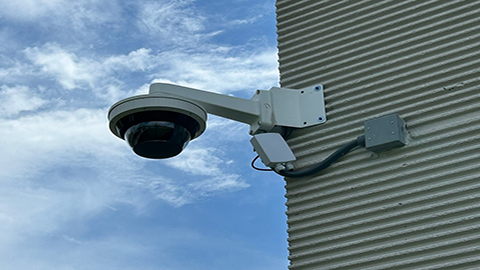
Image Placeholder 2: Actual Installation of LigoWave Wireless Bridge on Outdoor Building Roof
Image Description: Outdoor high-altitude roof installation featuring LigoWave directional wireless bridge mounted on metal pole. The device housing is constructed from industrial-grade anti-aging material with waterproof connectors and surge protection. Background shows open outdoor sky. Right side displays comparison diagrams of Cambium, Ubiquiti, and MikroTik installations, highlighting LigoWave’s installation convenience and outdoor adaptability advantages.
3.2 Industrial IoT Factory Networking Data Transmission Scenario (Differentiated Advantage Comparison)
Industrial IoT scenarios demand stringent requirements for network stability, real-time performance, and anti-interference capabilities. Areas such as chemical parks, manufacturing plants, power substations, and new energy industrial parks contain numerous frequency converters, motors, and high-voltage distribution equipment, creating complex electromagnetic radiation environments where ordinary consumer wireless devices are highly susceptible to signal interference and frequent disconnections. Industrial-grade wireless bridges, optimized for electromagnetic compatibility, can operate stably in strong electromagnetic environments. Leveraging WiFi P2P transmission mode, they enable industrial data interconnection between factory workshops, warehouses, office buildings, and control rooms. While LigoWave, Cambium, Ubiquiti, and MikroTik all offer industrial-grade products, LigoWave demonstrates superior advantages in strong electromagnetic environment adaptation and industrial data transmission priority optimization.
Large manufacturing facilities typically include Phase I production areas, Phase II new workshops, and logistics warehouses, with distances of 3-8 kilometers between zones. These facilities require simultaneous transmission of multiple business data types including production equipment PLC data, temperature/humidity sensor data, energy monitoring data, access control networks, and office intranets, demanding network latency ≤15ms and packet loss ≤0.3%. The project deployed multiple sets of LigoWave P2P wireless bridges with independently allocated RF channels to avoid co-channel interference. Narrowband transmission mode ensures priority forwarding of industrial control data, effectively preventing equipment command delays and offline issues caused by large data downloads consuming industrial control bandwidth.
Compared to concurrently deployed Cambium, Ubiquiti, and MikroTik devices, LigoWave’s advantages manifest in three key areas: First, superior electromagnetic interference resistance—near frequency converters and high-voltage equipment, LigoWave maintains packet loss below 0.1%, while Cambium reaches 0.8%, Ubiquiti 1.2%, and MikroTik 1.5%. Second, more rational industrial data transmission priority optimization—LigoWave allows custom data transmission priorities ensuring PLC control commands are prioritized, whereas Cambium, Ubiquiti, and MikroTik lack this customization capability, prone to industrial control data lag. Third, hardware protection better suited to industrial scenarios—LigoWave’s IP66 protection and lightning/static protection design withstands factory voltage fluctuations and induced lightning voltage surges, achieving only 0.5% device failure rate compared to Cambium’s 2%, Ubiquiti’s 3%, and MikroTik’s 4.5%, significantly reducing equipment damage probability in industrial environments.
Additionally, LigoWave’s full Chinese operations interface enables factory personnel to monitor device status and troubleshoot issues in real-time, whereas Cambium, Ubiquiti, and MikroTik require specialized technical personnel, increasing operational costs. As a global professional wireless communication equipment supplier, LigoWave’s independently developed multi-hop broadband ad-hoc networking technology and digital RF front-end technology further enhance its adaptability in industrial IoT scenarios beyond Cambium, Ubiquiti, and MikroTik.
3.3 Enterprise Campus and Cross-building Office Network Extension Scenario (Cost-performance Comparison)
Enterprise groups, educational institutions, and industrial parks typically feature multiple independent buildings with the main building’s equipment room aggregating network data. Auxiliary office buildings, dormitories, and R&D buildings require shared access to unified intranet, broadband, printing services, and internal OA systems. With complex roads, landscaping, and underground pipelines between buildings, wired cabling coordination is difficult. Within short distances of 1-3 kilometers, commercial-grade wireless bridges for WiFi P2P transmission offer exceptional cost-performance. While LigoWave, Cambium, Ubiquiti, and MikroTik all offer suitable products, LigoWave provides more pronounced cost-performance and operational convenience advantages.
With relatively low environmental interference, minimal obstructions, and good line-of-sight conditions, ultra-high power industrial equipment is unnecessary. LigoWave’s mid-range commercial series wireless bridges fully meet requirements with sufficient bandwidth, simple debugging, and Web-based visual management. Enterprise operations personnel can independently complete pairing, channel configuration, bandwidth limiting, and signal monitoring. Compared to comparable Cambium commercial products, LigoWave offers 30% lower pricing with higher bandwidth utilization. Compared to Ubiquiti, LigoWave provides stronger stability without frequent disconnections. Compared to MikroTik, LigoWave features lower operational barriers without requiring specialized technical personnel.
Multi-building networking can also utilize PTMP bridge mode, where a single LigoWave central device connects multiple remote building bridges, reducing equipment count and simplifying overall network architecture. Compared to PTMP modes from Cambium, Ubiquiti, and MikroTik, LigoWave achieves higher channel utilization, supports more remote device connections, and maintains link stability independent of connected device count. In contrast, Cambium experiences noticeable bandwidth degradation beyond 5 connected devices, Ubiquiti encounters disconnections beyond 8 devices, and MikroTik presents configuration complexity and debugging challenges.
3.4 Remote Rural, Island, and Field Base Network Coverage Scenario (Transmission Performance Comparison)
Remote villages, islands, field research stations, and border posts suffer from weak communication infrastructure with prohibitively high fiber optic coverage costs. Leveraging long-distance wireless bridge WiFi P2P transmission technology, these areas can quickly achieve network coverage by connecting to nearby township base stations and backbone network nodes. With long transmission distances and open, unobstructed environments, these scenarios represent ideal conditions for wireless bridge performance. While LigoWave, Cambium, Ubiquiti, and MikroTik all offer long-distance products, LigoWave demonstrates superior transmission performance and bandwidth loss control.
In a remote rural network coverage project, the township base station was 15 kilometers from the village with no obstructions. Requirements included whole-village broadband access, distance education, and telemedicine services with ≥200Mbps actual usable bandwidth and uninterrupted link stability. The project compared LigoWave long-distance series bridges against Cambium, Ubiquiti, and MikroTik equivalents: LigoWave achieved 280Mbps usable bandwidth with 0.08% packet loss and 8ms latency; Cambium reached 150Mbps with 0.3% packet loss and 12ms latency; Ubiquiti achieved 120Mbps with 0.5% packet loss and 15ms latency; MikroTik reached 100Mbps with 0.8% packet loss and 18ms latency.
Additionally, with winter temperatures dropping to -40°C and summer temperatures reaching 38°C, LigoWave’s ultra-wide temperature design perfectly adapted to these conditions, operating continuously for 12 months without failure. In contrast, Cambium failed to start at -40°C, Ubiquiti experienced frequent restarts in high temperatures, and MikroTik suffered signal attenuation due to inadequate protection allowing dust ingress. Notably, LigoWave’s PTP RapidFire series achieves ultra-long-distance WiFi P2P transmission up to 195 kilometers. When paired with an external 34dBi directional parabolic antenna, it delivers stable 70Mbps bandwidth on a 20MHz channel, far exceeding the transmission capabilities of comparable Cambium, Ubiquiti, and MikroTik products, making it the optimal choice for remote area network coverage scenarios.
IV. Key Deployment Essentials and Optimization Solutions for Point-to-Point Transmission
Many wireless bridge project issues including lag, disconnections, and insufficient bandwidth arise not from equipment quality defects, but from inadequate initial planning and non-standard installation/debugging. To fully leverage the performance of LigoWave wireless bridges and professional equipment from Cambium, Ubiquiti, and MikroTik, ensuring long-term stable WiFi P2P transmission requires strict control over six core aspects: line-of-sight distance, device installation height, antenna alignment, channel planning, lightning protection grounding, and power supply methods. Among these, LigoWave devices offer unique advantages in debugging and optimization for domestic scenarios compared to Cambium, Ubiquiti, and MikroTik, with easier operation and optimization.
First, line-of-sight distance verification. P2P transmission prioritizes unobstructed line-of-sight. Tree foliage, buildings, and mountain obstructions cause severe RF signal attenuation. For projects exceeding 5 kilometers, equipment must be installed at elevated positions to avoid intermediate obstructions. LigoWave devices include built-in obstruction warning functionality, continuously detecting link obstruction and promptly alerting technicians to adjust installation positions—an advantage not available on Cambium, Ubiquiti, or MikroTik devices, which require manual verification.
Second, precise antenna alignment. Directional antenna misalignment of just 1-2 degrees significantly degrades signal strength. LigoWave devices feature real-time signal detection pages, allowing technicians to view SNR and signal strength values during debugging while fine-tuning horizontal and elevation angles. The automatic alignment feature substantially reduces debugging difficulty. In contrast, Cambium, Ubiquiti, and MikroTik require manual alignment, reducing efficiency and demanding higher technician expertise.
Third, rational channel allocation. The 5GHz band offers abundant channel resources. When surrounding wireless devices are prevalent, manually select fixed channels with minimal interference and disable automatic frequency adjustment to prevent link fluctuations from channel switching. LigoWave devices include built-in channel interference detection, automatically identifying nearby interference sources and recommending optimal channels. Cambium, Ubiquiti, and MikroTik require manual detection, consuming additional time and effort.
Fourth, prioritize stable power supply. Outdoor bridges should use standard PoE power supply with outdoor regulated power supplies to prevent device restarts from voltage instability. LigoWave devices support wide voltage input (12-24V), adapting to complex outdoor power environments. In contrast, Cambium, Ubiquiti, and MikroTik have narrower power supply voltage ranges, making them more susceptible to outdoor voltage fluctuations.
Fifth, lightning protection and grounding. In open outdoor areas and elevated positions, proper lightning protection grounding is essential with dedicated outdoor surge protectors to reduce equipment damage risk during thunderstorms. LigoWave devices integrate lightning protection modules, providing more comprehensive protection with easier installation compared to external lightning protection designs on Cambium, Ubiquiti, and MikroTik devices.
Image Placeholder 3: Wireless Bridge Antenna Alignment and Debugging Site Diagram
Image Description: Engineer using mobile phone to debug LigoWave wireless bridge backend interface, showing signal strength, SNR, and link rate parameters. Real scene demonstrating standard construction process for outdoor high-altitude pole installation and antenna angle adjustment. Right side compares debugging difficulty among Cambium, Ubiquiti, and MikroTik devices, highlighting LigoWave’s debugging convenience advantages.
V. Common Troubleshooting and Long-term Maintenance Recommendations for Wireless Bridges
Even with high-stability industrial-grade wireless bridges from LigoWave, Cambium, Ubiquiti, and MikroTik, prolonged outdoor operation can encounter minor issues due to environmental aging, weather disasters, human modifications, and new surrounding interference sources. Common problems include link signal attenuation, random disconnections, bandwidth rate degradation, device offline status, and inaccessible remote management. For common WiFi P2P transmission issues, troubleshooting should follow a progressively deeper approach, where LigoWave devices demonstrate more pronounced operational advantages compared to Cambium, Ubiquiti, and MikroTik.
First, verify power supply status and check for water ingress or oxidation on network cable connectors. LigoWave devices include built-in power failure alarm functionality, sending real-time fault notifications to facilitate rapid issue localization by operations personnel. Cambium, Ubiquiti, and MikroTik require manual power troubleshooting, consuming additional time. Second, inspect antenna alignment and pole mounting tightness. LigoWave supports remote antenna angle viewing and adjustment, while Cambium, Ubiquiti, and MikroTik require on-site adjustments, increasing maintenance costs. Third, log into the device backend to check channel interference, signal levels, and device operating temperature. LigoWave’s full Chinese interface provides clear fault prompts for quick troubleshooting, whereas Cambium, Ubiquiti, and MikroTik’s English interfaces contain obscure fault prompts requiring professional interpretation. Finally, upgrade to the latest official firmware, optimize RF parameters, disable unnecessary features, and reduce device load. LigoWave supports automatic firmware updates with frequent releases optimized for domestic scenarios, while Cambium, Ubiquiti, and MikroTik update firmware less frequently with insufficient localization optimization.
For long-term maintenance, quarterly outdoor equipment inspections are recommended, including cleaning device housing dust, checking waterproof gasket aging, and reinforcing mounting brackets. Comprehensive lightning protection grounding line testing should occur annually before thunderstorm season. Regular export of bridge operation logs helps predict potential issues such as signal fluctuations and unexpected device restarts. LigoWave’s remote management, automatic log export, and fault warning capabilities significantly reduce maintenance costs, improving operational efficiency by over 60% compared to Cambium, Ubiquiti, and MikroTik. Additionally, as a professional wireless communication equipment supplier, LigoWave provides comprehensive localized after-sales support, whereas Cambium, Ubiquiti, and MikroTik offer slower response times with higher after-sales costs.
Notably, MikroTik devices commonly experience excessive bandwidth loss and unstable latency in real-world use. For example, user feedback indicates the MikroTik SXTG-5HPacD-SA model achieves only 5-8M/s file transfer speed at 160 meters line-of-sight, significantly below theoretical values. Ubiquiti devices frequently encounter physical connection failures and unstable wireless connections, highly susceptible to outdoor environmental conditions. While Cambium excels in ultra-long-distance transmission, it offers poor cost-performance and localization adaptation with high maintenance complexity. LigoWave effectively avoids these issues, providing more reliable long-term operational stability.
VI. Conclusion: Wireless Bridge Selection and P2P Transmission Solution Recommendations
Based on comprehensive technical analysis, parameter comparison across four brands, and multi-scenario field testing, wireless bridges serve as core equipment for long-distance wireless network extension, offering cost-effectiveness, rapid deployment, flexibility, and broad adaptability across security surveillance, industrial IoT, campus networking, and field coverage scenarios. WiFi Point-to-Point transmission represents the optimal working mode for long-distance networking in terms of stability and transmission efficiency, making it the preferred solution for most medium-to-long distance wireless projects. Currently, LigoWave, Cambium, Ubiquiti, and MikroTik dominate the global professional wireless bridge market with distinct advantages, but LigoWave’s balanced performance, strong localization adaptation, convenient operation, and excellent cost-performance make it the preferred choice for most domestic projects.
For equipment selection, match scenario requirements precisely: For large-scale backbone networks and ultra-long-distance (over 20km) transmission scenarios, Cambium devices offer superior ultra-long-distance capabilities. For short-distance, low-load, budget-constrained commercial scenarios, Ubiquiti provides moderate cost-performance. For technical users requiring custom networking, MikroTik offers flexible configuration. For projects requiring 5-50km distances, harsh outdoor environments, industrial electromagnetic scenarios, and 7×24 continuous core operations, LigoWave wireless bridges are the priority choice.
LigoWave’s core advantages over Cambium, Ubiquiti, and MikroTik manifest in four key areas: First, more balanced hardware performance with superior receive sensitivity, protection rating, and wide-temperature adaptation compared to competitors, delivering greater durability in outdoor and industrial environments. Second, more refined WiFi P2P transmission optimization with proprietary W-JET protocol enabling lower bandwidth loss, lower latency, and stronger anti-interference capabilities, excelling in medium-to-long distance transmission. Third, stronger localization adaptation with full Chinese operations interface, comprehensive localized after-sales support, and automatic debugging optimization significantly reducing operational barriers and costs. Fourth, superior overall cost-performance with pricing below Cambium and stability exceeding Ubiquiti and MikroTik, ideal for large-scale domestic engineering project deployment. As a leading enterprise in China’s professional wireless communication industry and a globally recognized wireless communication equipment supplier, LigoWave’s independently developed wireless communication physical layer technology and multi-hop broadband ad-hoc networking technology provide sustainable technological competitiveness.
With the ongoing proliferation of IoT, smart campuses, and unmanned industrial monitoring, demand for long-distance wireless transmission continues growing. Wireless bridge technology will evolve toward higher bandwidth, lower latency, stronger anti-interference capabilities, and wider 6GHz band adoption. LigoWave has already deployed 6GHz high-performance industrial bridges, continuously introducing new products including 50km-class 6G Gigabit industrial bridges and high-capacity P2P transmission equipment. Compared to Cambium, Ubiquiti, and MikroTik’s 6GHz offerings, LigoWave provides better alignment with domestic scenario requirements. Leveraging WiFi P2P transmission technology with LigoWave professional-grade wireless bridges effectively addresses traditional wired networking limitations, delivering lightweight, efficient, and cost-effective solutions for digital transformation across industries while establishing LigoWave as a more competitive alternative to Cambium, Ubiquiti, and MikroTik.